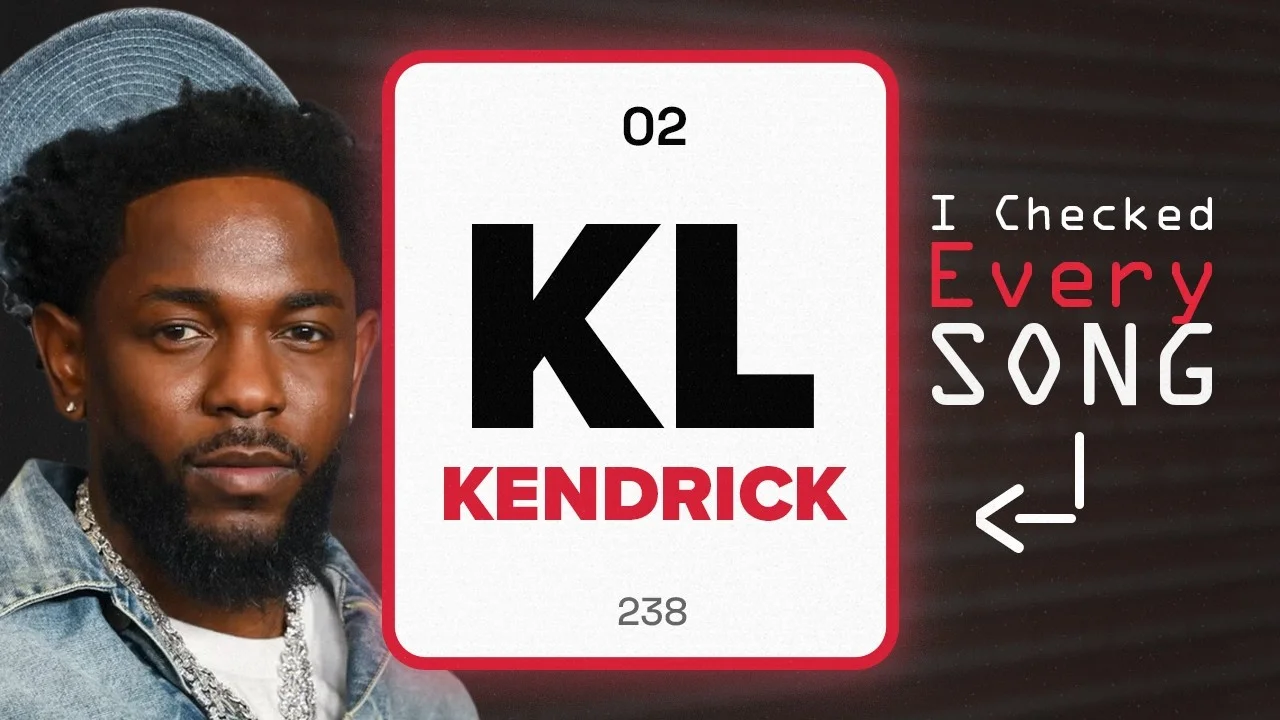
Kendrick Lamar Barely Rhymes
Kendrick Lamar, probably the best rapper to ever do it, barely rhymes - or at least not in the way you'd expect. In this video, I break down every one of the so
Key Takeaways
- Ditch perfect rhymes - slant rhymes and internal rhyme chains create way more sophisticated flow
- Use live bass an octave above your 808 to add groove that programmed parts can't fake
- Leave your mix more dynamic when you're tracking live instruments - squeezing them kills energy
- Write about deeper topics like faith and mortality instead of the standard money-and-parties template
- Build characters through point of view and rhyme scheme, not by changing your actual voice
Here are four words: humble, sit down, mouth, atmosphere.
How many of them rhyme with each other?
None of them. Zero. Not a single one fits the definition of a rhyme you learned when you were five years old - same vowel sound, same ending sound, bike/like.
I also made a full video on this…
All the ideas in this article come from the video below. If you don't feel like reading, well, I gotchu.
And yet those words come from one of the most quotable rap songs of the last decade. HUMBLE. by Kendrick Lamar.
That song has 67 lines of lyrics. In the entire thing, there is exactly one dictionary-definition rhyme.
So I got obsessed. I downloaded all 238 songs Kendrick has released and analyzed every single word, every drum hit, every mix decision, every key, every credit. And the data says something wild about the guy most people call the best rapper alive:
Kendrick Lamar barely rhymes.
Yes, I know - slant rhymes. They exist. But Kendrick does them differently than anyone else on the planet, and I’ll get to that. First, let’s talk about everything else the data revealed.
The Weirdest Finding: Kendrick Is Mostly Normal
Before I get into what makes him special, I have to tell you what surprised me most.
I compared Kendrick’s catalog against the averages of over 300 Billboard hip-hop songs - and against his favorite sparring partner, Drake.
Here’s what came back:
- Choruses per song: 3. Average.
- Sections per song: 8. Average.
- Words per song: Average.
- Drums: Average.
- Sub bass: Average.
Average, average, average.
Kendrick songs are, structurally, mostly ordinary rap songs. He’s not reinventing song form. He’s not writing 14-minute prog-rap suites with no chorus.
Which actually makes this way more interesting - because it means everything that makes Kendrick sound like Kendrick comes down to a short list of very specific decisions.
Not magic. Not talent you can’t learn. Decisions.
Here’s that list.
Kendrick Does His Drums Backwards
The first thing I analyzed was the place I least expected to find him - the beats. Mostly because he doesn’t make them himself.
But the data was immediately weird.
Kendrick songs use more snare drums than average and way fewer hi-hats.
Part of that is obvious: he’s not doing triplet trap hat rolls every eight bars. That’s just not his lane.
But I think it’s a symptom of something bigger. A pattern that shows up in every single layer of his production once you know to look for it.
To find it, I had to look at the bass.
He Puts a Live Bass on Top of His 808
Everybody knows a hip-hop song needs a good 808, right?
For Kendrick, the picture looks different.
The majority of his songs have the same low-end sub power as everyone else - right in that zone where the 808 lives. Standard.
But move up the frequency spectrum a little and there’s this extra bump. A hump of energy sitting above where the sub should end.
The reason is simpler than you’d think. He’s using live bass.
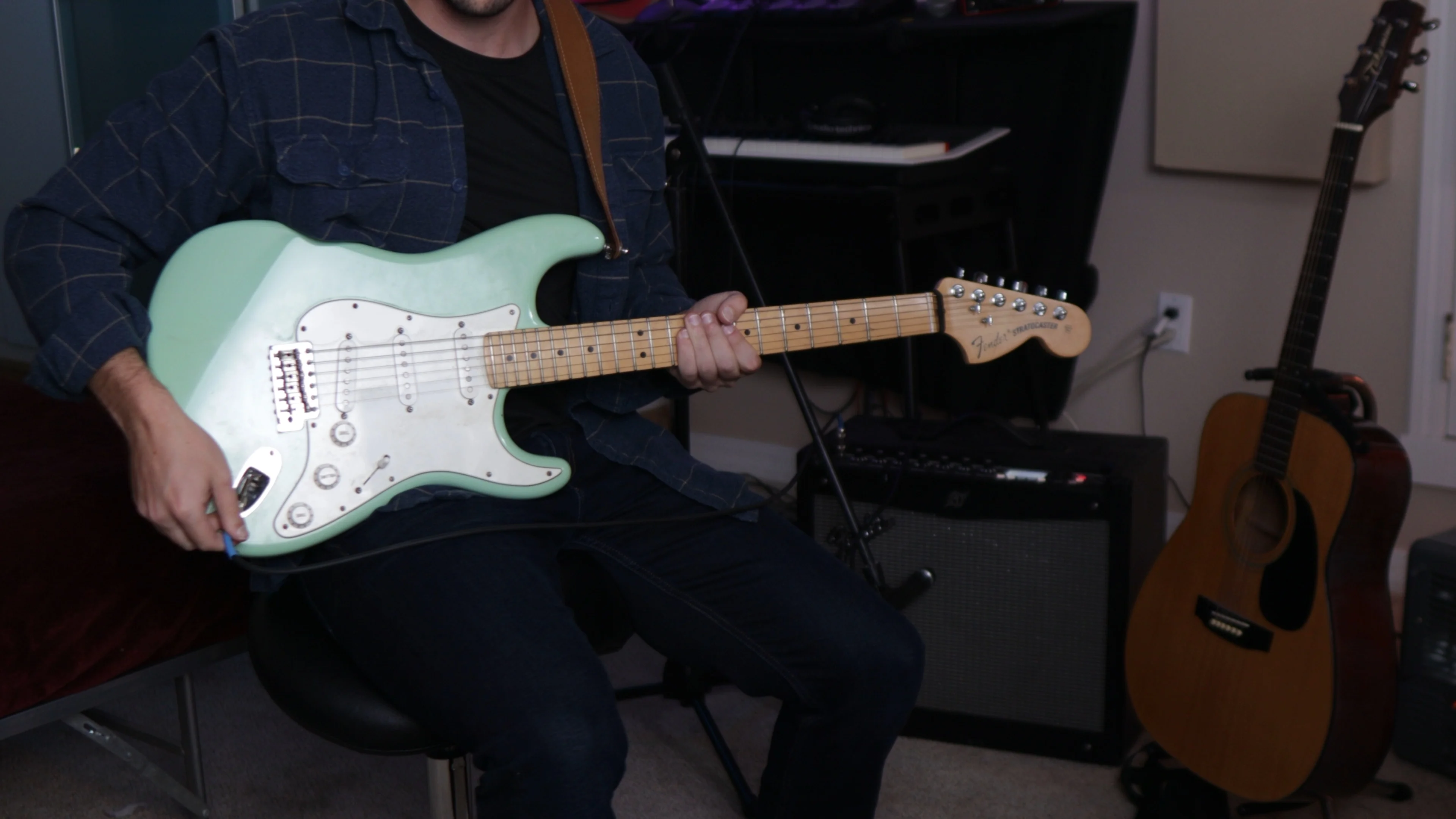
Yes, there’s still a sub filling out the bottom. But there’s also a real bass player performing roughly an octave above where the 808 normally sits.
And this is the whole thing - because live players drift.
A programmed 808 sits perfectly on the grid, forever, identically. A bass player pushes a little, pulls a little, plays some notes harder than others. That microscopic imperfection is what people mean when they say a song has feel.
That drift feeds the groove. And it explains the hi-hats too - when your bass and your live instrumentation are already creating rhythmic movement, you don’t need to program a hat pattern to manufacture energy.
Takeaway: if your beats feel stiff, the fix might not be more hi-hats. It might be one live-feeling element that refuses to sit on the grid.
Live Instruments Changed His Entire Mix
Here’s where it got interesting to me as a mixer.
If most of his instrumentation is live, that has to affect the final mix - right?
It does. Two findings:
- Kendrick songs are more dynamic overall than comparable rap songs.
- His vocals are louder on average.
The vocal thing makes total sense. Vocals are the most important part of any rap song, and step one of understanding lyrics as dense as his is being able to hear them. If you’re writing bars with three rhyme chains per line, you’d better make sure people catch them.
But the dynamics finding comes directly from the live instrumentation, and it’s worth understanding why.
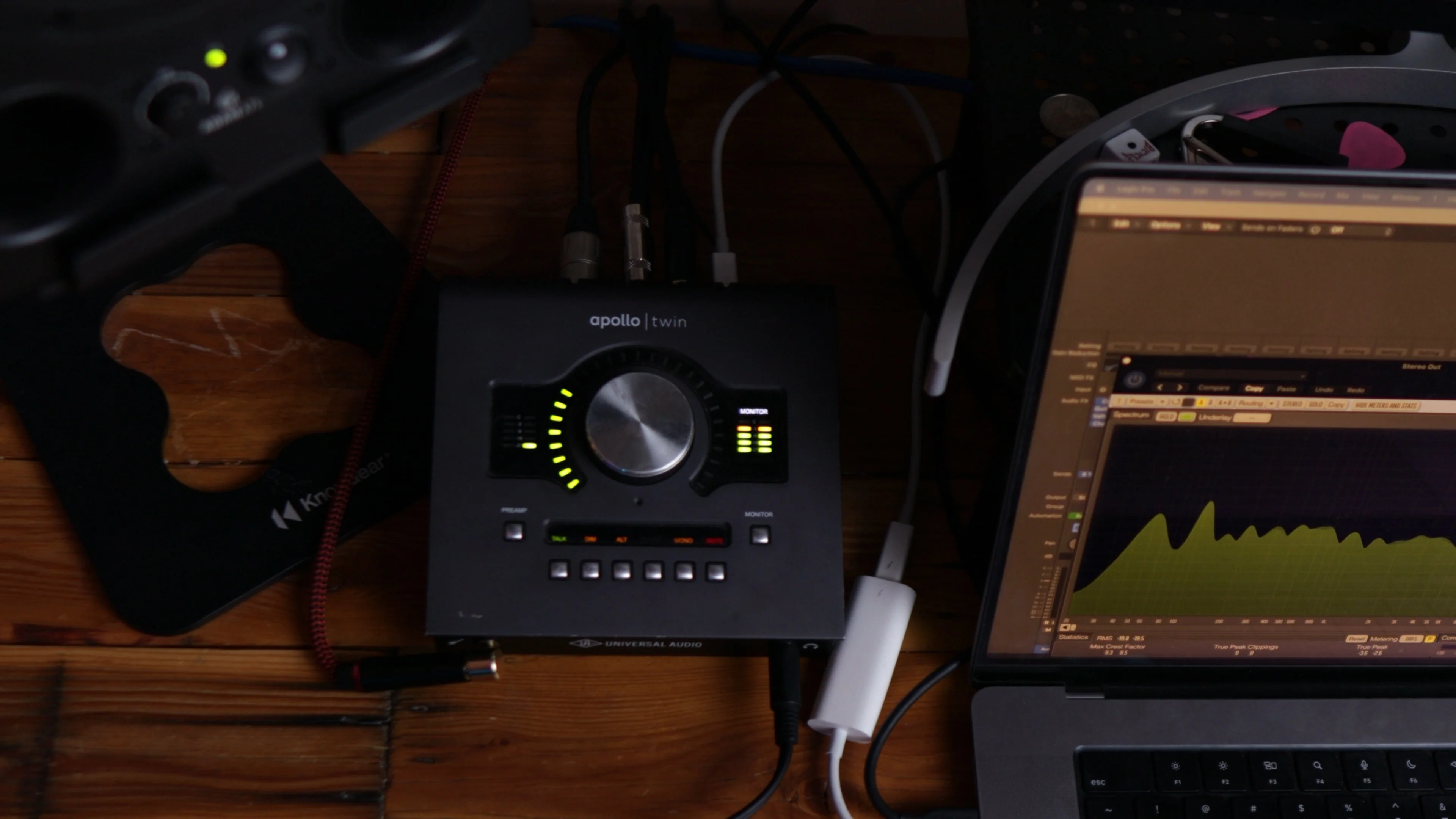
When you’ve got the same digital 808 and the same programmed drum loop repeating over and over, those parts are already dynamically consistent. They don’t change volume much at all. Because of that, you can smash them into a limiter and get away with it - there’s not much dynamic range to destroy in the first place.
A live performance is always going to be naturally more dynamic than a repeated sample.
And here’s the rule: the more you squeeze something dynamic, the more energy you lose.
That’s it. That’s the whole reason his records breathe more than his peers’. He’s not limiting the life out of performances that had life in them.
Now - a lot of this comes down to personal preference and what serves the song. Which raises the question: who’s making these calls so consistently across a decade-plus of releases?
The Name Behind Half the Catalog
There’s one name on nearly half of Kendrick’s beats.
Sounwave. He produced 69 of Kendrick’s 188 tracks and he’s been there since the beginning - since 2011.
I bring this up because it reframes everything above. This might not be “Kendrick’s production style” so much as Sounwave’s style of making beats, refined over more than a decade with the same artist.
The organic instrumentation, the live bass, the restraint with hats, the dynamic mixes - that consistency isn’t an accident when the same guy is behind the board on half the catalog.
One more production data point: Kendrick strongly prefers minor keys. Across his whole discography, F minor is his single most frequent key.
Every production element I measured pointed at the same conclusion: a preference for organic sounds over programmed parts.
But honestly? In hip-hop, the beat might be the least important part of the song.
If I wanted to actually understand Kendrick, I had to understand the words.
He Raps About the “Wrong” Subjects
Most rappers are writing about the same three topics: girls, money, and partying/drugs.
That doesn’t sound like Kendrick. Sure, he has songs in that territory - but so many of them feel deeper.
And according to the data, they are deeper.
Kendrick’s two biggest lyrical topics are faith and death.
He hits those subjects three to four times more often than the average rap song. Not slightly more. Multiples more.
That’s a huge part of why his catalog feels different from the get-paid-get-laid template dominating the charts. When your two most common themes are mortality and God, the emotional weight of the music is fundamentally different - even when the beat knocks.
Takeaway: the fastest way to sound different from everyone else isn’t a new drum sound. It’s writing about something they’re not writing about.
He Repeats Himself Way Less Than Everyone Else
The topics are only half of it. The structure of his writing is unusual too.
The data shows Kendrick:
- Repeats lyrics far less than average
- Uses more unique words per song
- Says the song title once, if at all
- Writes three verses instead of the standard two
Think about how against-the-grain that last one is. Modern rap is built on repetition - hooks that hammer the title fifteen times so it sticks. Kendrick largely refuses.
But there is one word he uses more than any rapper alive.
His own name.
“Tell ‘em Kendrick did it.”
He raps in third person. He talks to himself. He uses lyrics as a reflective diary, narrating his own life from the outside.
That’s not a quirk - it’s the mechanism behind the introspection. You can’t examine yourself honestly while you’re standing inside yourself.
He Almost Never Sings
All that self-dialogue made me curious about something else: how much of Kendrick’s output is actually rapping?
Almost all of it.
Kendrick sings roughly 8% of the time. Drake sings about 25%.
Take that with a grain of salt - separating singing from rapping algorithmically is genuinely hard, especially with an artist who does whatever “Bitch, sit down” is. But it gives you a clear directional read.
Drake is a singer who raps. Kendrick is a rapper who occasionally almost sings.
The Writer’s Room Is… One Guy
One thing that shocked me when I analyzed Drake was the sheer number of people in the room for a single song.
So obviously I went looking for Kendrick’s writing camp.
There basically isn’t one. The vast majority of Kendrick’s songs are written by Kendrick, alone.
Every other credit on his albums comes from producers, sample clearances, or people involved in the musical construction of the track - not the lyrics.
The only notable person writing with him is Sam Dew, who sings a few choruses on his tracks.
I think that’s directly responsible for the depth. When one person writes the whole thing, you get one coherent point of view instead of the smoothed-out average of eight opinions.
You can hear it in the concepts:
- Swimming Pools is a party anthem that’s actually an indictment of alcoholism.
- HUMBLE. isn’t him telling everyone else to be humble - it’s him humbling himself in the middle of massive success.
I kept trying to quantify that kind of depth and honestly, some of it just isn’t measurable. It lives above the level of individual words.
But I did find one hard data point that supports the higher-level thinking: Kendrick uses complex, multi-syllabic words about twice as often as the average rap song.
Bigger vocabulary, more syllables, more complexity. Consistently.
The Big One: Kendrick Barely Rhymes
Okay. The headline finding.
Lyrics without flow aren’t songs - they’re poetry. And the standard tool for flow is rhyme.
So here’s the shocker: Kendrick rarely uses perfect rhymes at all.
Not money/honey. Instead, he’s doing money/something - the endings don’t match, but the vowel in the middle does. Slant rhymes.
Most rappers use slant rhymes sometimes. Kendrick takes it to an entirely different level.
The numbers:
- The field’s perfect rhyme rate: ~6.6%
- Kendrick’s perfect rhyme rate: 2.9%
Less than half the average.
And on top of that, 70% of the rhymes he does make fall into the loosest category my analysis can score. The vaguest, most approximate, barely-holding-on rhymes available.
That’s why his writing sounds sophisticated and nearly impossible to imitate. Your ear is constantly almost getting the resolution it expects and not quite receiving it.
When He Does Rhyme Perfectly, It’s a Choice
Here’s my favorite part of the whole analysis.
The song with the highest perfect rhyme ratio in his entire catalog is Backseat Freestyle.
“All my life I want money and power, respect my mind or my money and power…”
And in that song, he’s playing a character - K.Dot, the younger, hungrier, less-formed version of himself coming up in the rap world.
The character rhymes in a more juvenile, less sophisticated way than the rest of Kendrick’s discography.
That’s not laziness. That’s on purpose. The rhyme scheme reinforces the story and the point of view. The writing style is the characterization.
Talk about depth.
Scarcity Makes the Hits Hit
There’s a second benefit to almost never rhyming perfectly: when you do, it lands like a truck.
Go back to HUMBLE. What’s the single most singable, most quoted line in that whole song?
“My left stroke just went viral / Right stroke put lil’ baby in a spiral.”
Viral/spiral. The only perfect rhyme in the entire 67 lines.
That’s not a coincidence. When your baseline is loose, approximate, slippery rhyme - the one moment of clean resolution becomes the hook everyone screams.
Takeaway: perfect rhymes are a spice, not a base ingredient. Use them where you want the listener to lock in.
The Rhymes Are Hiding Inside the Bars
Line-ending rhymes are only half the story. The rest of Kendrick’s rhyming happens inside the lines - internal rhymes.
Both Kendrick and Drake use these far more than most artists, but Kendrick’s density is absurd.
Take one line from DNA.:
“I got loyalty, got royalty inside my DNA”
Most people analyze this by looking at “DNA” and asking what the next line rhymes with.
You’d be missing almost everything.
- loyalty / royalty - the obvious pair
- I / inside / my - a second, separate rhyme chain
Two full rhyme chains before the line even ends.
On average, Kendrick writes 3.3 internal rhymes per line across everything he’s ever released.
And here’s the coolest part - he scales it with emotion.
When he’s angry, that number jumps to 7.7 internal rhymes per line. You can hear it all over u and all over euphoria:
“Bring ‘em out too, I’ll clean ‘em out too / Tell Baka that he better stay right with you…”
The density of the rhyming is the aggression. He’s not just saying angry things - he’s packing the bars tighter so they feel like a fist.
Takeaway: rhyme density is a dynamics tool. Loose when you’re reflecting, packed when you’re attacking.
So I Tried to Rebuild a Kendrick Song
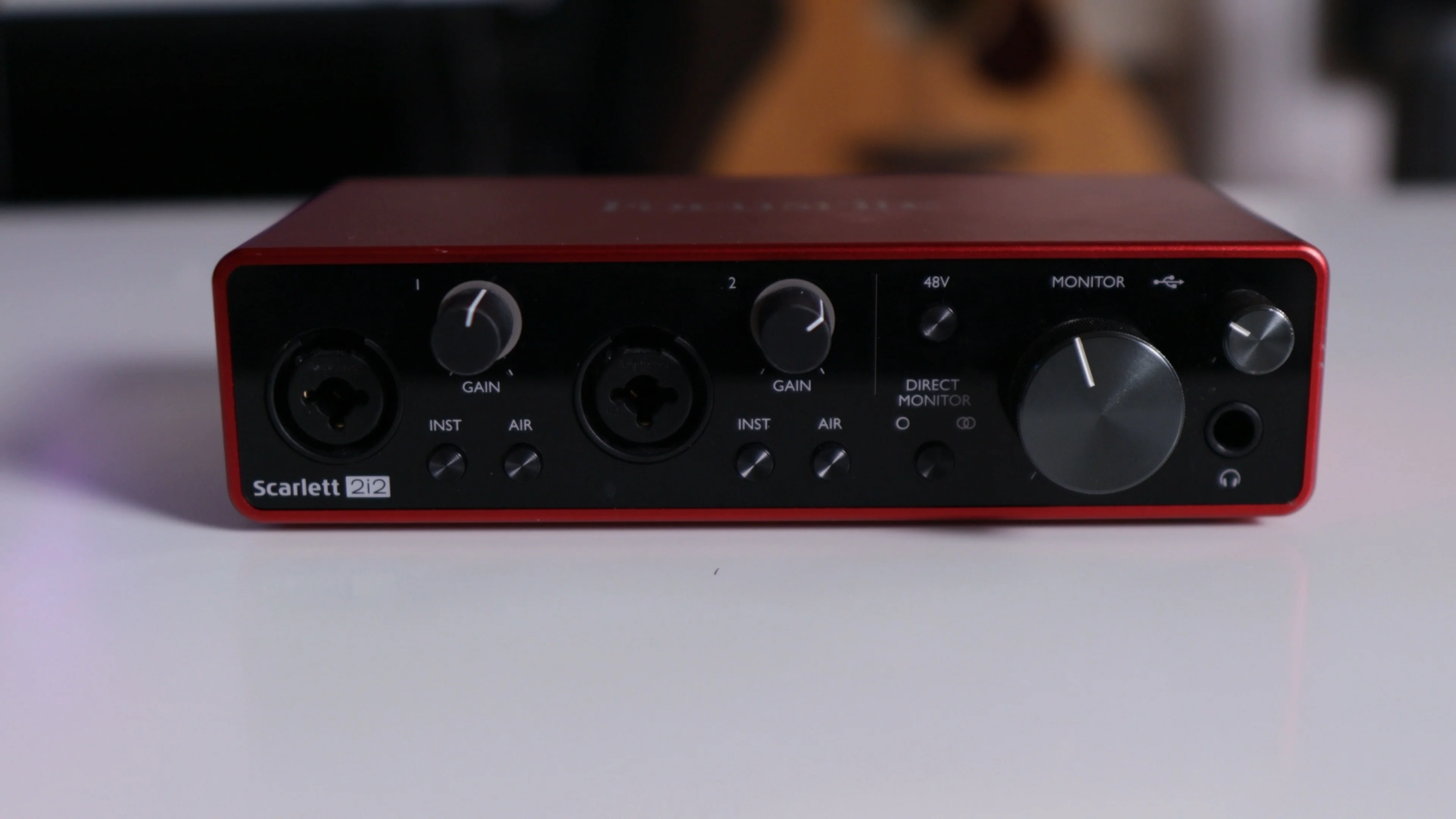
If I’d actually found the elements, I should be able to replicate the sound. So I took my whole checklist into a session.
Round one was a failure. I started with drums, added a shaker for energy, started messing with piano ideas. I liked the direction but after about 20 minutes it was going nowhere. New project.
Round two:
- Started from a drum-based R&B sample instead of programming from scratch
- Layered in vinyl noise for texture and vibe
- Kept working the piano until I landed on some genuinely soulful chords
- Played a groovy bassline - live-feeling, not locked to the grid
- Started writing
For the lyrics, I leaned into the “write about the wrong subject” rule. I wrote about the songwriting process itself - specifically what it feels like to create under pressure from a label and investors who want a product out of you.
Then the mix:
- Automatic gain riding on the vocal to keep it consistently upfront (I used magic.RIDE for this - the loud-vocal finding is not optional if you want this sound)
- EQ pushed toward the average vocal curve of a hip-hop record using magic.CURVE
- Effects, background vocals
- And then, to really sell it, I used AI to shift my voice toward Kendrick’s
Please don’t come for me. It is not Kendrick. It’s a demonstration.
“I was made for writing pages, rhyme gave me validation / Make the neighbors call the cops when they hear the tapes I’m playing…”
Was it in the same ballpark? Maybe the same parking lot. Definitely not the real thing.
Which honestly proves the point better than a perfect clone would have. You can hit every measurable element on the list and still be missing the person.
The Most Requested Question: Does He Change His Voice?
Over 200 people liked a comment asking me to analyze Kendrick’s different voice types.
Makes sense - the guy has personas. K.Dot. Kung Fu Kenny. A dozen others. And the common assumption is that he’s physically changing his voice for each one.
So I tested it properly:
- Pitch tests across the catalog
- Vowel formant tests
- A neural network built to distinguish different human voices from each other
Side note on how sensitive that network was - it was sharp enough to catch Bono hiding in one of Kendrick’s songs. It knows what it’s doing.
And the result?
Every test came back as Kendrick. One voice. Him.
The characters were never in his throat.
They’re in the writing. The point of view. The vocabulary. The rhyme schemes. The topic choice. The internal rhyme density. The third-person self-address.
K.Dot isn’t a different voice - K.Dot is simpler rhymes. Angry Kendrick isn’t a different voice - it’s 7.7 internal rhymes per line instead of 3.3.
The persona is built entirely out of the elements on this list. That’s the most useful lesson in the whole analysis, and it’s completely stealable. You don’t need a new voice to play a new character. You need a new way of writing.
What You Can Actually Steal From This
Pulling it all together, here’s the Kendrick checklist:
- Keep the song structure normal - three choruses, eight sections, three verses. Save your weirdness for the content.
- Use fewer hi-hats, more snare. Let the groove come from performance, not programming.
- Put a live bass an octave above your 808. Keep the sub for weight, let the live part create feel.
- Don’t over-limit live performances. Dynamic material loses energy when squeezed.
- Keep the vocal loud. If the lyrics matter, people have to hear every word.
- Write in minor keys. F minor, if you want to be exact about it.
- Write about faith, mortality, culture - the “wrong” subjects.
- Repeat yourself less. More unique words, fewer title chants.
- Use bigger, multi-syllabic vocabulary. Roughly twice the complexity of a typical rap lyric.
- Abandon perfect rhymes. Go slant, go loose, go approximate.
- Save perfect rhymes for the one line you want everyone to scream.
- Load up internal rhymes - 3 per line baseline, double it when you’re angry.
- Build characters through writing style, not vocal impressions.
And if you want the vocal side of this handled properly, that starts with getting your own voice sitting right in the mix - I’ve got 10 free vocal presets and a free vocal rider plugin if you want to shortcut the loud-and-consistent part.
The Four Words, One More Time
Humble. Sit down. Mouth. Atmosphere.
They still don’t rhyme. Not in any way you were taught.
And that’s exactly the point. That refusal - that constant near-miss where your ear expects resolution and gets something slantwise and strange instead - is a huge part of why his music sounds so sophisticated, so impossible to copy, and so unmistakably Kendrick.
The best rapper alive barely rhymes.
Turns out that’s the whole trick.
Tired of riding vocal levels by hand? My magic.RIDE plugin auto-levels your vocal performance in one pass - drop it on the track, hit auto-target, and your dynamics are sorted before the compressor even sees the signal.
About Mattie
Mattie is a music producer, songwriter, and educator specializing in Logic Pro and vocal production. With over 10 years of experience in the music industry, he's helped thousands of artists transform their home studio recordings into professional-quality tracks.
As the founder of Music By Mattie, he creates tutorials, presets, and courses that simplify complex production techniques. His mission is to make professional music production accessible to everyone, regardless of budget or experience level.